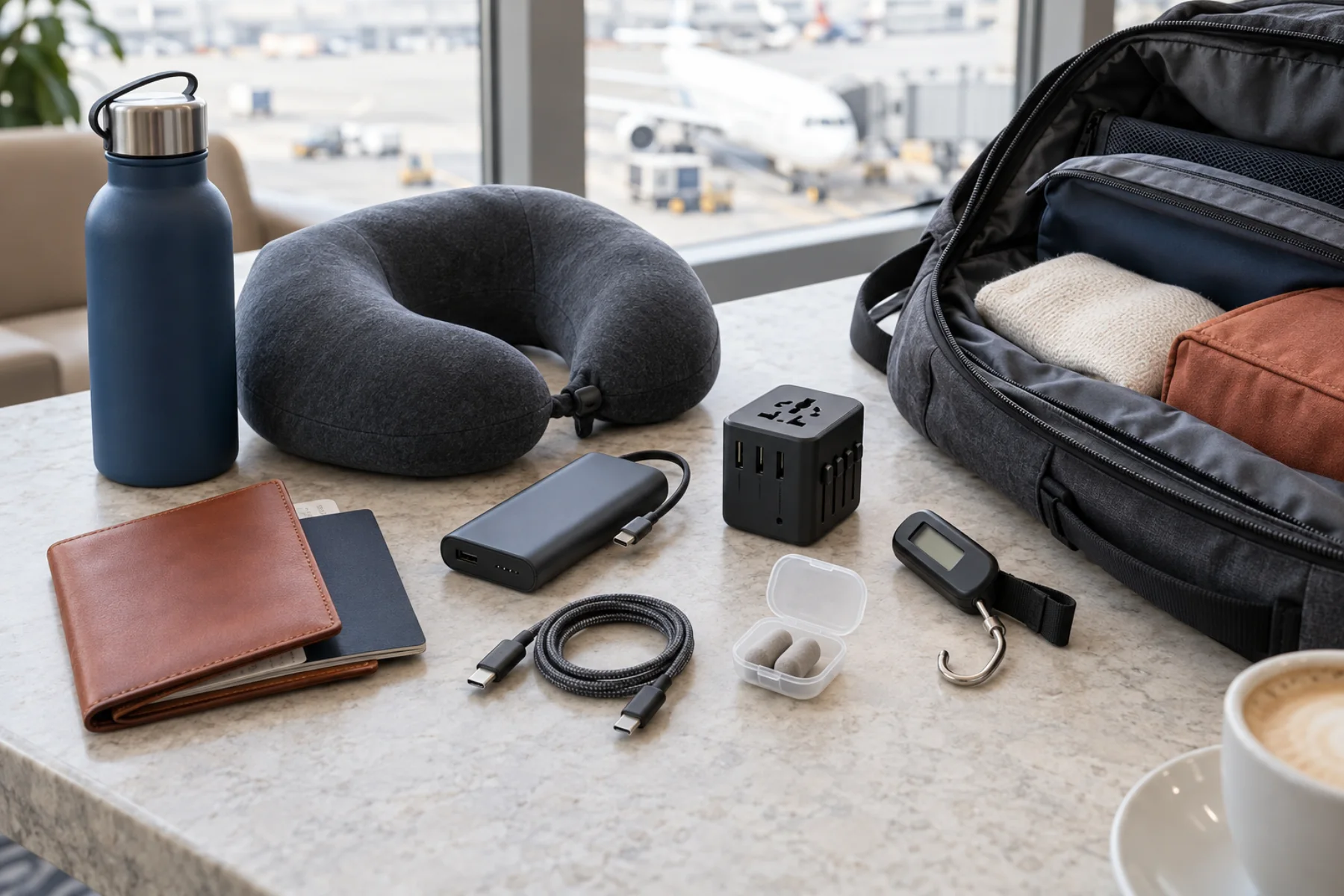

Best Packing Cubes for Carry-On Travel
The best packing cube is not necessarily the one that compresses the flattest. It is the one that fits your bag, survives repeated zipping, and lets you find a clean shirt without unpacking everything else.
We compared current manufacturer specifications with recent independent travel-editor roundups, then selected five widely available options with meaningfully different strengths. This is a researched shortlist, not a claim that we personally lab-tested every set. We also left prices out because they move frequently across Amazon storefronts.
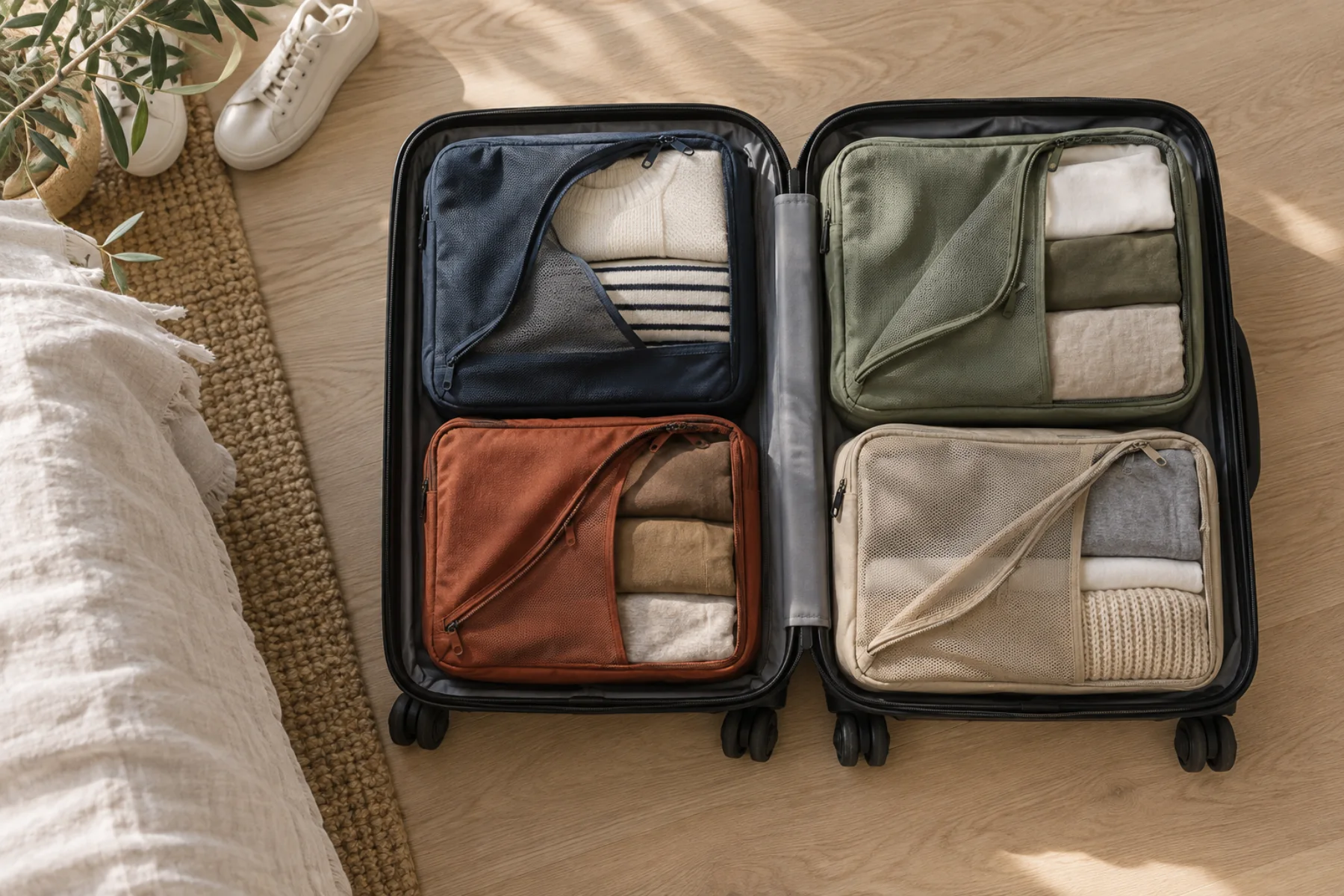
The quick verdict
Choose the BAGSMART Compression Packing Cubes if you want a versatile starter set with several sizes. Pick a Peak Design Packing Cube when you would rather buy one refined cube and value its clean/dirty divider. The Eagle Creek Pack-It Isolate Compression Set is the better fit for weight-conscious backpack travel, while the Thule Compression Cube Set favors sturdy materials and hardware. For basic organization at the lowest cost, the Amazon Basics 4-Piece Set does the job without compression.
How we chose
We looked for products that remain useful after the novelty wears off: sensible dimensions, low empty weight, reliable materials, visibility or easy access, and a range that works in common carry-ons. We checked current specifications on the brands’ own sites and compared them with recent editorial testing from Condé Nast Traveler and Travel + Leisure.
We prioritized established products that are easy to find on both US and European Amazon storefronts. We did not rank by star count alone, since reviews can combine sizes, colors, and older revisions. We also did not treat “maximum compression” as an automatic win: a dense cube can make a bag bulge and never reduces its actual weight.
1. BAGSMART Compression Packing Cubes: best overall set
BAGSMART’s compression sets are a sensible first purchase because they cover different clothing categories without forcing you into a costly modular system. Travel + Leisure currently names the brand’s compression set its best packing-cube choice in a broader organizer test.
The second zipper reduces depth after packing, which is useful for soft clothing such as T-shirts, underwear, knitwear, and activewear. The tradeoff is predictable: a full multi-piece set adds more fabric and zippers than one or two ultralight cubes.
Best for: families, longer trips, and travelers buying their first complete set.
Skip it if: you travel with a 20–25 litre backpack and only need one clothing cube.
2. Peak Design Packing Cube: best premium cube
Peak Design’s cube is a particularly strong one-bag choice. Its expansion/compression zipper changes the depth, while the internal divider lets clean and worn clothing share the same cube without touching. A wide opening also makes it easier to reach one item without emptying the cube.
It costs more per cube than budget sets and the shape works best when it matches the geometry of your bag. The small size is often enough for underwear, socks, and a few tops; the medium suits a larger carry-on wardrobe but can dominate a compact backpack.
Best for: frequent one-bag travelers who value quick access and a clean/dirty compartment.
Skip it if: you want several sizes for occasional holidays at the lowest possible cost.
3. Eagle Creek Pack-It Isolate Compression Set: best lightweight set
The Pack-It Isolate S/M set keeps the hardware and fabric light. Eagle Creek lists the small cube at about 54 g and the medium at about 82 g, with 70D recycled nylon and a compression zipper. The translucent material helps identify contents without a full mesh panel.
That thin construction is the point, but it also means the set feels less structured than thicker cubes. It works especially well inside backpacks where every gram matters and the surrounding bag already provides protection.
Best for: backpackers, rail trips, and weight-limited cabin bags.
Skip it if: you prefer firm sides that hold their shape while unpacked.
4. Thule Compression Cube Set: best for durability
Thule combines small and medium cubes made from water-repellent, bluesign-approved 100D ripstop nylon with YKK zippers. The brand lists the expanded small cube at 26 × 18 × 11 cm and the medium at 36 × 25 × 15 cm—dimensions that tile neatly inside many cabin suitcases.
The semitransparent fabric provides some visibility while keeping contents discreet. This set is heavier and usually dearer than Eagle Creek’s lightweight option, but the materials make sense for travelers who pack often and are hard on zippers.
Best for: frequent flyers who want robust hardware and a simple two-cube system.
Skip it if: minimum weight or maximum pieces per euro matters more than durability.
5. Amazon Basics 4-Piece Set: best budget organization
This four-piece set uses different sizes and mesh tops to divide clothing without compression. That makes it a good way to find out whether cubes suit your packing style before investing in lighter or more specialized options.
Standard cubes will not flatten a jumper the way a compression cube can. They do, however, prevent small garments from migrating around a suitcase, and the varied shapes are handy for filling gaps around shoes and toiletries.
Best for: occasional travelers and anyone who mainly wants order, not compression.
Skip it if: reducing the depth of bulky clothing is your main goal.
Compression cubes vs regular packing cubes
Regular packing cubes organize. Compression cubes organize and use a second zipper to reduce the cube’s depth. They work best with airy textiles; denim, shoes, toiletry bottles, and tightly folded technical fabrics have little air to remove.
Compression can also redistribute volume rather than make it disappear. If a cube becomes a hard, rounded brick, it may leave unusable gaps in a rectangular suitcase. Stop before the zipper strains and check the total bag weight separately.
What size should you buy?
For most carry-on trips, start smaller than the marketing photos suggest:
- One medium cube for tops and bottoms
- One small cube for underwear and socks
- One optional small cube for sleepwear, swimwear, or laundry
Measure the flat interior of your suitcase or backpack before buying. Two well-fitting cubes are more useful than a six-piece set that fills the bag before you add shoes, toiletries, and tech.
A packing method that works
Build your packing list first in journeybot, then assign each clothing group to a cube. Fold structured pieces along the cube width and roll soft items to fill narrow gaps. Close the main zipper without force, then work the compression zipper around the perimeter a little at a time.
Keep one cube underfilled at departure. It gives you somewhere to put worn clothes, small purchases, or the layer you remove when the weather changes. Packing cubes are at their best when they reduce decisions, not when every compartment is packed to breaking point.
FAQ
Are compression packing cubes worth it?
They are useful when clothing volume, rather than luggage weight, is your main constraint. Compression cubes can flatten soft clothing and make a bag easier to organize, but they do not reduce weight and can encourage overpacking.
Do packing cubes actually save space?
Standard cubes mainly organize. Compression cubes can reduce the volume of soft, bulky clothes, although the result depends on fabric and how tightly you pack. Neither type creates extra weight allowance.
How many packing cubes do I need for a carry-on?
Most travelers need two or three: a medium cube for tops and bottoms, a small cube for underwear and socks, and optionally a second small cube for sleepwear, swimwear, or laundry.
Should I roll or fold clothes in packing cubes?
Fold structured garments and roll soft items such as T-shirts, underwear, and activewear. The best method is the one that fills the cube evenly without forcing its zipper.